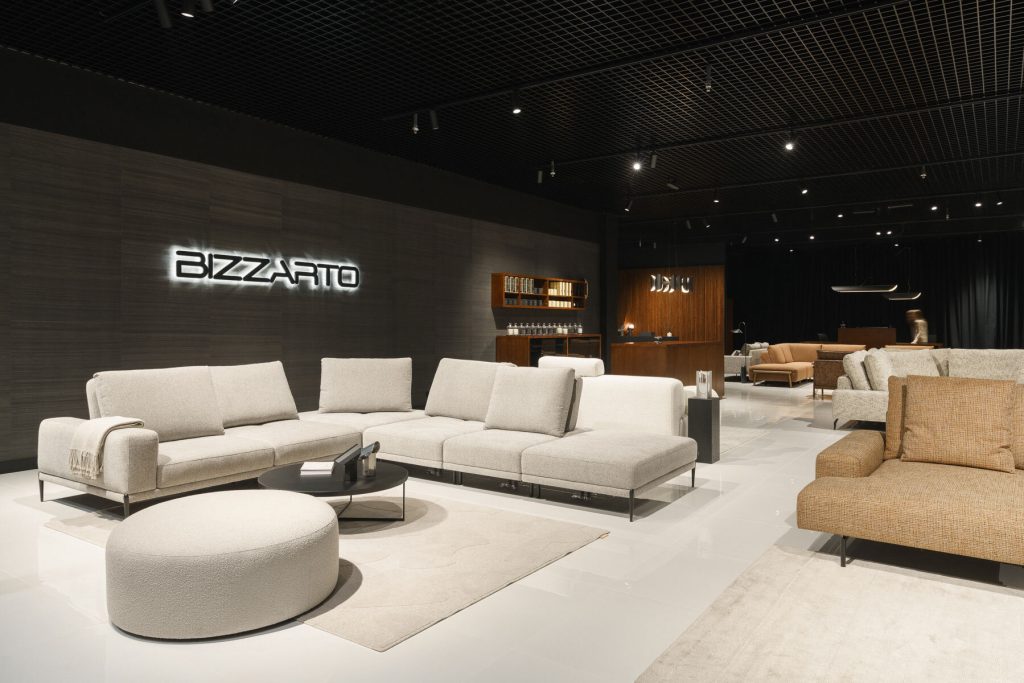
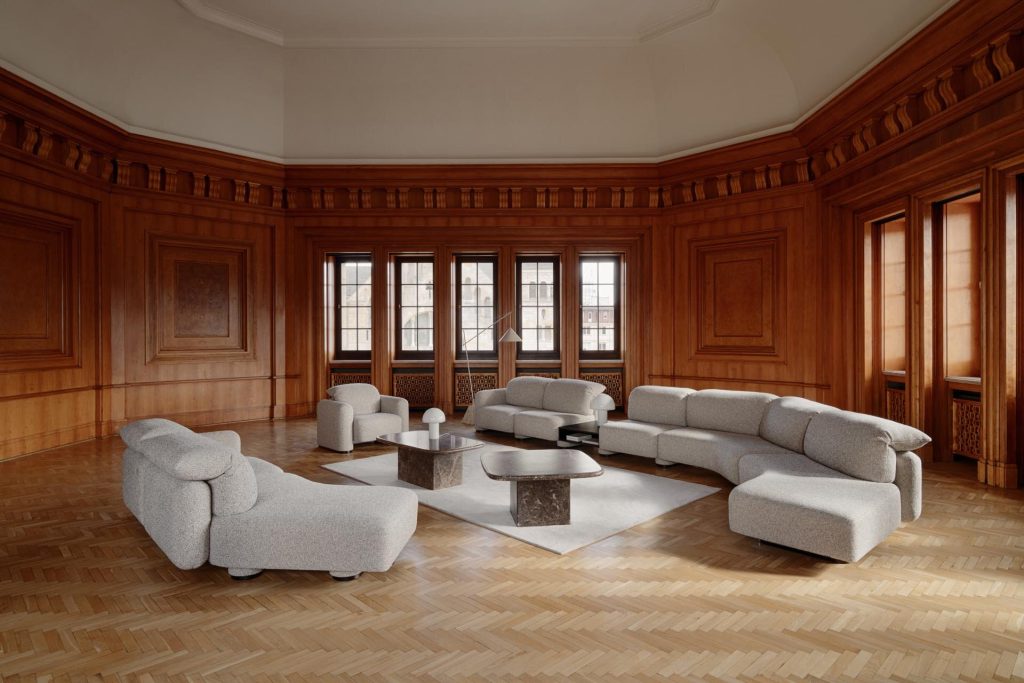
In a smaller living room, the sofa’s width is not the only consideration. Its depth, the scale of the armrests and the space left for everyday movement matter just as much.
Mark the outline before choosing
Use masking tape to mark the dimensions of the chosen piece of furniture on the floor. Walk the usual route from the entrance to the window and table. Check that you can open cupboards freely and move a chair out. This trial tells you more than comparing sofa widths alone.
Compare the seating space
Two models with the same overall width may offer different amounts of seat space. Pay attention to the armrests and back depth. A lower or more visually open shape may change how the room feels, but it does not replace checking the actual dimensions.
Choose functions you will use
If the sofa will also be used for sleeping, check the documentation for the specific version and the space needed when extended. A bedding compartment or movable footstool also needs operating space. Check the functions for the chosen model and layout, as versions within the same collection may differ.
Limit competing shapes
Pair the sofa with a few necessary pieces rather than filling the entire outline of the living room. Consider a footstool or armchair only after checking the walkways. Cohesive materials and a calm palette help the interior read as a whole.